Teak Beds and Bedroom Sets for Boutique Hotels
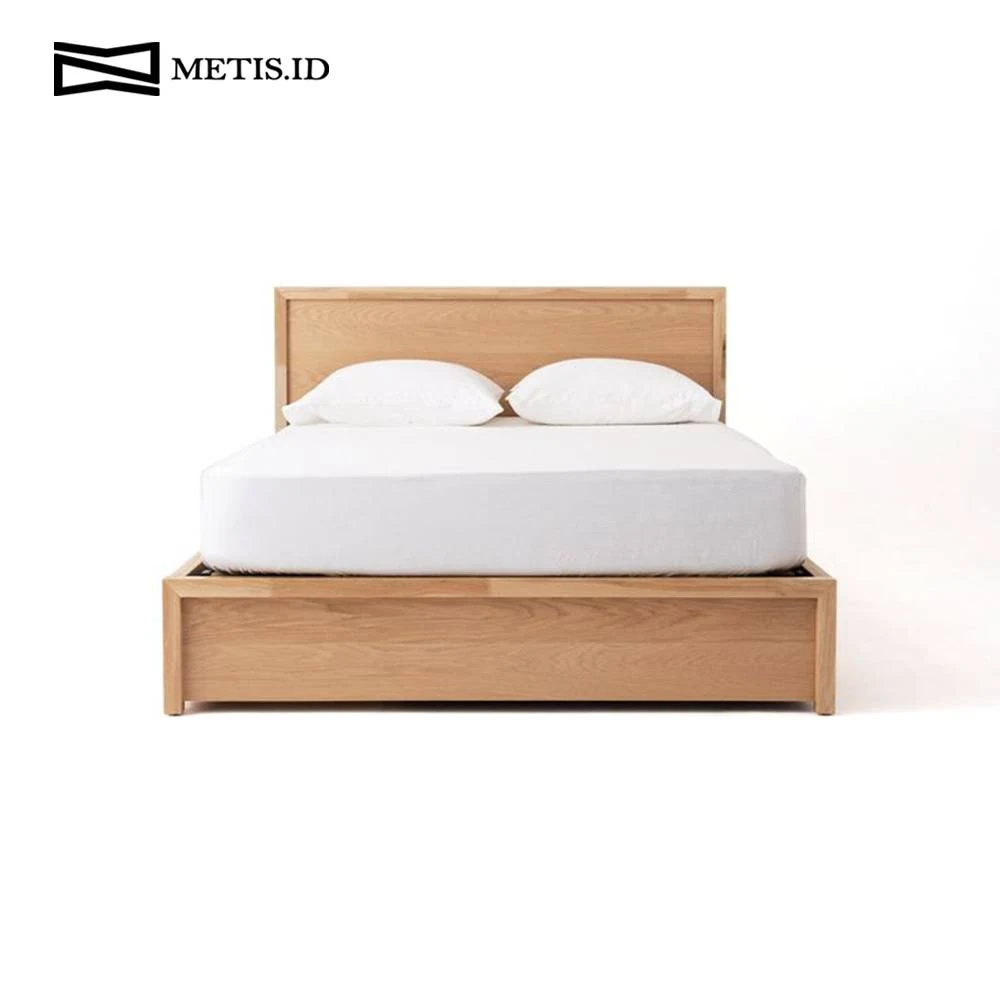
Boutique hotel owners rarely lose sleep over whether teak looks good in a photograph. They already know it does. The uncomfortable question arrives later, usually at two in the morning, when the room plan is open on a laptop and the supplier's catalog is open in another tab: will a solid teak bed actually get up my staircase, fit into a room that is only three meters wide, and survive years of guests who drop suitcases on the frame and pull themselves up by the headboard? With one room, a wrong decision is an annoyance. With ten rooms, it becomes a pattern you cannot hide from guests.
That is the problem worth solving before you order anything. Not the beauty of the wood, but the fit, the assembly, the wear, and the way a bedroom set behaves when real people use it every night. Teak is a sensible answer to most of these worries, but only if you buy it with a few measurements and one honest conversation with the workshop. This article walks through that process in the order it should happen.
## The Real Worry Behind "Teak Looks Beautiful"
Most buyers arrive at teak through aesthetics and stay for the durability, but the anxiety is usually about logistics and longevity. Will the piece arrive at all, in one piece or in panels, and will it survive the journey from Jepara to a building with no service lift? Will housekeeping be able to clean it without damaging the finish? Will it still look calm and expensive after a hundred guests?
A bed is different from a chair. It is large, heavy, and it stays in one place for years. It also touches the guest more intimately than any other object in the room, because they sit on the edge of it, lean against the headboard, and judge the entire property from it. So the buying decision should be made in this order: the delivery path, the room dimensions, the guest's body, the mattress, and finally the design. Design last is not a downgrade of design. It is the only way the design ends up actually usable.
## Why Teak Beds Behave Differently in a Guest Room
Teak is a dense hardwood with natural oils in the grain, which is why it has a long history in boat decks, garden furniture, and humid climates. Those oils make it resistant to moisture and to the insects that find softer woods appealing. In a hotel context, this matters for a simple reason: guest rooms are wet places in ways that living rooms are not. Towels land on the floor, air conditioning runs cold at night and warm in the morning, windows stay open in the afternoon, and cleaning staff wipe surfaces far more often than a homeowner would.
A teak frame handles that fluctuation with much less drama than softer or more porous woods. It also ages in a way that suits hospitality: rather than chipping or peeling, the surface gradually settles into a softer golden-brown tone. That change is normal and, in a boutique setting, is often the point. The mistake is expecting a hotel bed to look exactly as it did on delivery day forever. The realistic goal is a frame that stays structurally tight, keeps its shape, and develops a warm, even patina that guests read as character rather than damage.
The one thing teak will not forgive is bad construction. A beautiful plank of teak joined with weak hardware will still wobble within a season. When you talk to a workshop, the conversation should shift quickly from the wood to the joinery, the supports, and the assembly method.
## Sizes and Clearances That Decide Whether the Room Works
Almost every layout regret in a boutique hotel comes from skipping a tape measure. Standard mattress sizes are a good starting point: 90 by 200 cm for a single, 120 by 200 cm for a small double, 140 by 200 cm for a double, 160 by 200 cm for a queen, and 180 by 200 cm or 200 by 200 cm for a king. These are mattress dimensions, not bed dimensions. A timber frame adds roughly 5 to 12 cm on each side, and a headboard adds depth at the wall.
The height guests actually feel is the top of the mattress, which usually sits around 50 to 60 cm from the floor in hotel comfort ranges. Below that, the frame height and the mattress depth have to be planned together, because a thick mattress on a tall base turns into a bed that older guests have to climb onto. Headboards commonly run 100 to 120 cm tall, measured from the floor, which suits both sitting up in bed and the visual proportion of a room with a 2.6 to 3 meter ceiling.
Clearances matter more than dimensions. Around 60 cm of free space at the sides and foot of the bed is the practical minimum for getting in and out comfortably, and the main walking path between the bed and the wall or wardrobe should be closer to 75 or 90 cm. A nightstand of 45 to 55 cm wide fits most boutique rooms without crowding. If two beds share a room, a gap of at least 50 to 60 cm between them stops the room from feeling like a hostel dormitory.
Then there is the path the bed takes to get there. A typical interior door frame is around 80 cm wide, and tight stair turns in older buildings are the reason knock-down construction exists. Measure the narrowest point of the route, the lift opening if there is one, and the turning radius at each landing before you fall in love with a 200 cm wide frame.
## Bedroom Sets: Where Matching Goes Wrong
A matching bedroom set sounds tidy and often photographs beautifully, but full matching can make a boutique room feel like a furniture showroom rather than a place someone chose to stay. The stronger approach is a family of pieces that share wood, tone, and a common design language without being identical. A bed with clean lines, a nightstand with the same timber and finish, a bench or a low chest at the foot, and a wardrobe that is simpler in detail than the bed.
The practical benefit is flexibility. If one room is 12 square meters and another is 20, you want to adjust the set rather than force the same layout into both. Custom furniture built in Jepara allows exactly this, because the widths, heights, and drawer configurations can be adapted per room instead of being pulled from a fixed catalog. A hotel with six rooms does not need six identical bedrooms, but it does need six beds that feel related when a guest walks from the lobby to their door.
Keep one rule when combining pieces: repeat the finish, vary the mass. Two heavy, dark, carved pieces in a small room fight each other, while one strong anchor piece and two quiet ones give the room rhythm.
## What to Ask a Jepara Workshop Before You Order
The distance between Jepara and your property is manageable, but only if the information travels clearly before production begins. Ask for a dimensioned drawing showing plan and elevation, with the mattress size marked, so you can check the frame overhang and the headboard height against your room. Ask how the bed is delivered, whether it arrives fully assembled or in panels, and how the panels are joined. For anything above the ground floor, an assembly-friendly design is not a luxury.
Ask about the slat spacing on the base, since slats set roughly 5 to 7 cm apart support a mattress properly, and about center support for wider sizes such as 160 cm and above. Ask what finish is applied, how it is maintained, and whether a small sample of the finish or a touch-up quantity can be included so housekeeping can deal with minor scuffs locally. Ask about the moisture content of the timber and how long it has been dried, because a frame built from wood that is still settling may move after it reaches a different climate.
Finally, order one room first. A pilot bed tells you more about comfort, assembly, and finish than any sample photo, and it lets your housekeeping team learn the piece before ten more arrive.
## Mistakes That Cost Hoteliers Money After Delivery
The most common mistake is choosing a bed before choosing the mattress. Frame height, side rail height, and headboard proportion all depend on the mattress depth, and getting this wrong means either a mattress that hides the frame entirely or one that sits awkwardly proud of it.
The second is ignoring the delivery route, which often surfaces only when the frame is already outside the building. The third is agreeing to a design without a dimensioned drawing, which leaves the exact width and height open to interpretation. The fourth is treating the headboard as decoration, when in a hotel it is a structural touchpoint that guests lean on, grip, and occasionally pull themselves up with, so it should be firmly fixed and its rear face protected where it meets the wall. The fifth is forgetting the room as a whole: a bed that fits but leaves no space for a suitcase, a chair, or a guest walking around at night is a layout problem, not a furniture problem.
A sixth, quieter mistake is not briefing anyone on care. A short written routine for housekeeping prevents most long-term damage.
## Daily Care That Keeps Teak Looking New in Hospitality Use
Keep the routine simple and consistent. Dust and wipe with a soft, dry or barely damp cloth rather than a soaking one, and dry any spill promptly instead of letting it sit. Avoid silicone-heavy polishes and abrasive cleaners, which can leave a film or dull the surface unevenly; a mild, wood-appropriate cleaner used sparingly is enough. Do not drag furniture across the floor when rearranging a room, and fit felt pads under legs and under the backs of nightstands.
Control the environment as much as the building allows. Stable room temperature and regular air circulation do more for a wooden bed than any product, and direct sun through a window for hours a day will fade one side of a frame faster than the other. Check screws and fittings once or twice a year, particularly on headboards and on beds that are frequently used as seating, and tighten anything that has loosened before it becomes a wobble. During periodic deep cleans, look at the joints rather than only the surface.
## A Practical Ordering Sequence
Measure the route and the room first, including the narrowest doorway, the stair turns, and the space you want to leave around the bed. Choose the mattress size and depth, then fix the frame height and headboard height around it. Sketch the layout on paper or tape the footprint on the floor and walk it for a minute. Decide which pieces belong in the set and which can be simplified. Then approach a workshop that produces custom teak furniture in Jepara, share the drawings and the constraints, and start with one room.
## Contoh produk terkait
Beberapa contoh produk yang bisa dilihat sebagai gambaran: [Dipan Jati Duco BED038](/produk/dipan-jati-duco-bed038), [Meja Jati Besi Natural MM003](/produk/meja-jati-besi-natural-mm003), dan [Kursi Makan Jati Besi Busa Natural DC023](/produk/kursi-makan-jati-besi-busa-natural-dc023).
If you are planning a boutique property and want to work through the measurements, model options, and finishing choices before committing to a full order, you are welcome to consult with METIS Interior on WhatsApp. Share your room plan and the sizes you have in mind, and the discussion can stay practical: what fits, what to adjust, and how the pieces should be built and delivered.